A Matter of Radiance

-
Location
Uzbekistan National Pavilion
19th International Architecture Exhibition 2025
La Biennale di Venezia
Venice, Italy
-
Commisioner
Gayane Umerova
Art and Culture Development Foundation (ACDF)
-
Year
2025
-
Status
Completed
-
Program
Cultural
-
Team
Ekaterina Golovatyuk
Giacomo Cantoni
Ksenia Bisti
Karolina Pieniazek
Manmeet Singh Obhan
Lorenzo Bagagli
-
Artists
Armin Linke
Azamat Abbasov
Ester Sheynfeld
Mukhiddin Riskiyev
-
Catalogue Contributors
Odilkhuja Parpiev
Sultan Suleymanov
Ilkhom Pirmatov
Rustam Azimov
Steve Woolgar
Suhbat Aflatuni
-
Collaborations
Graphic Design: Studio Pupilla
Model Restoration: Afruzkhon Akhyoyev, Diyora Bakhodirova, Dilnura Bekchanova, Khayitali Gofurov, Sabina Kadyrova, Ozobek Khasanov, Malika Murodova
Heliostat: Lanaro Steel Technology
Façade Mock-Up: SNT Europe (Mattia Tofanelli, Eugenio Schiavon)
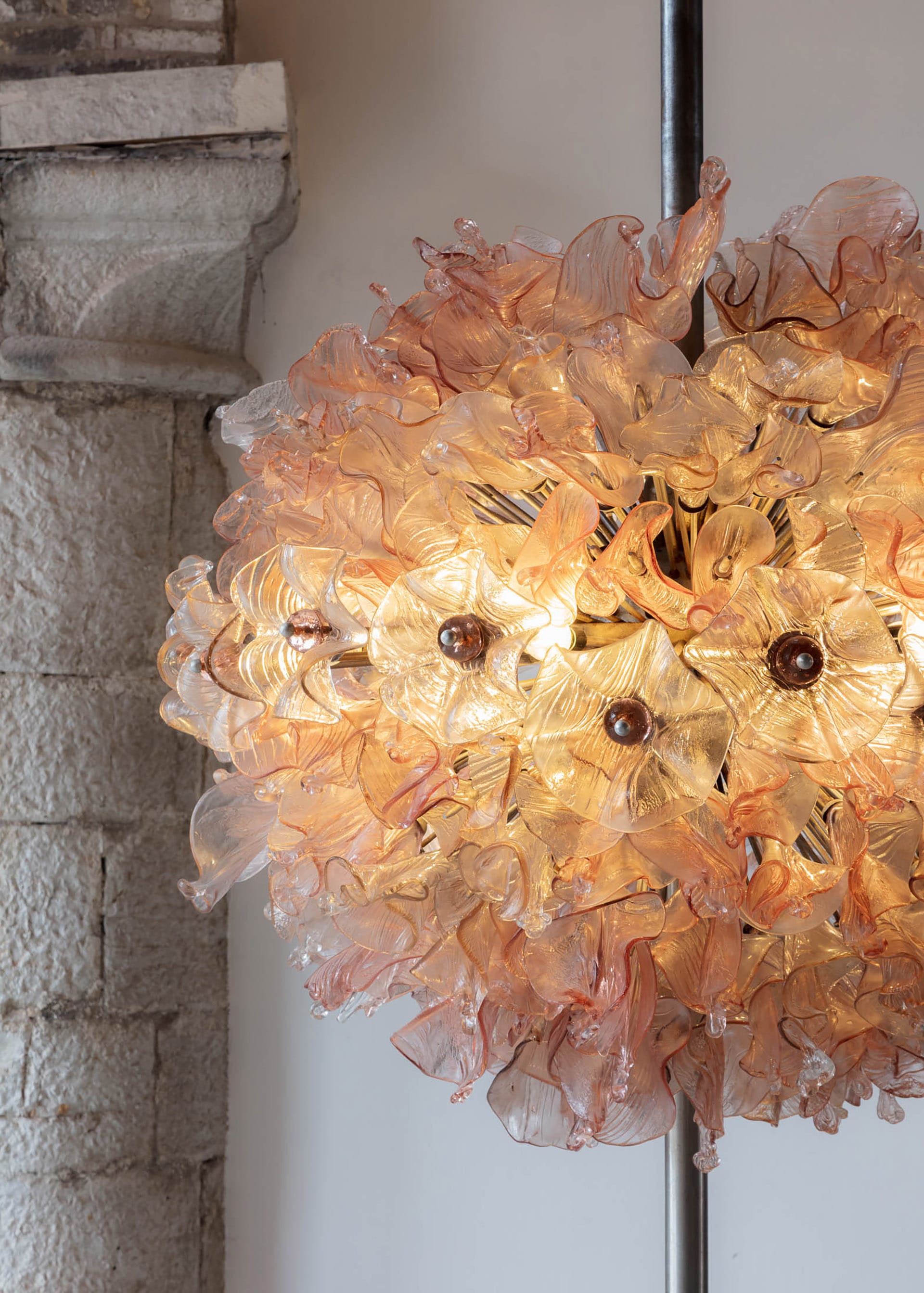
Chandelier: Sun Institute of Materials Science of the Academy of Sciences of the Republic of Uzbekistan, CitySize
Bench: Ricehouse
-
Surface
600 sqm
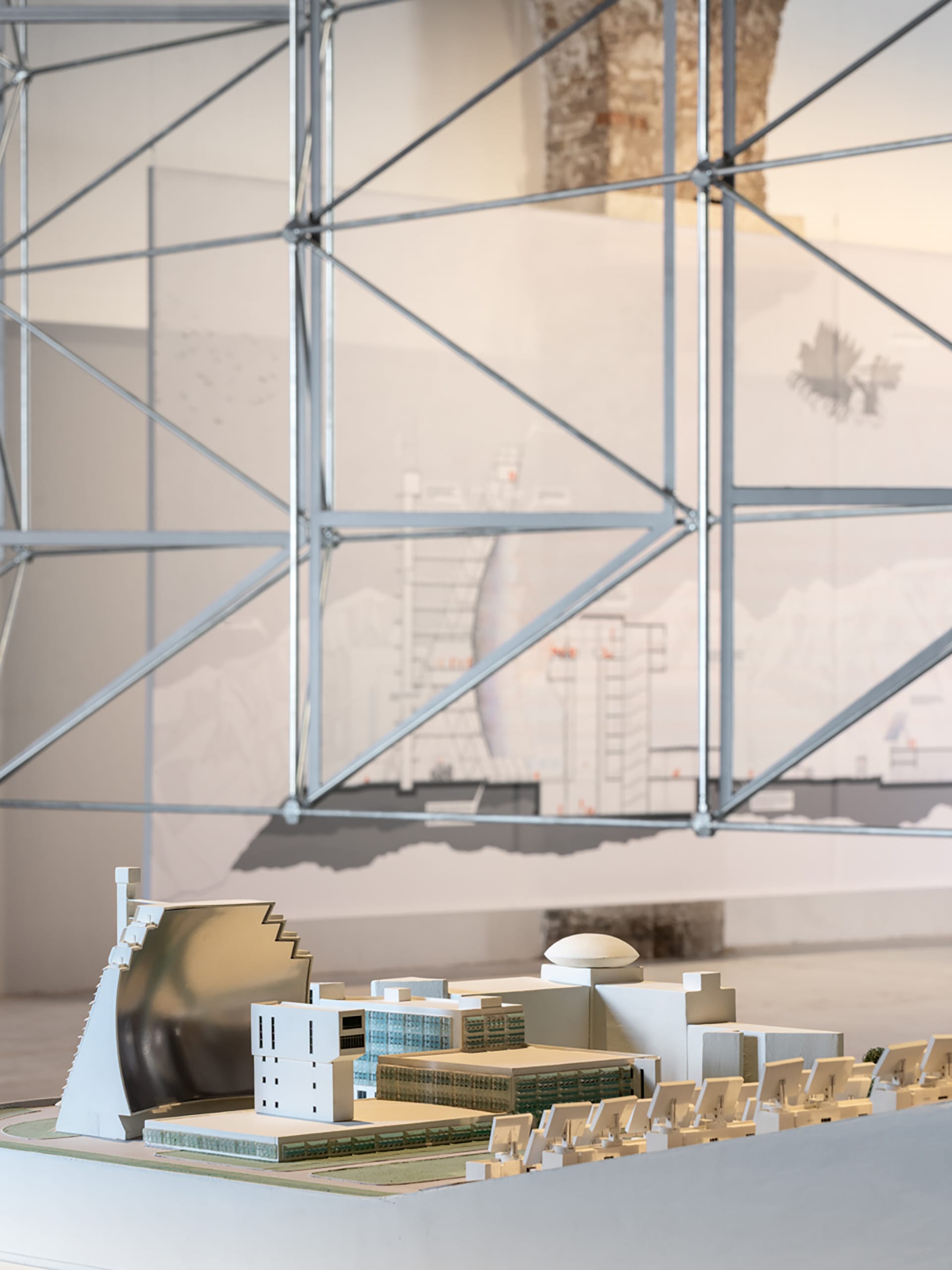
Responding to the Biennale’s overarching theme, Intelligens. Natural. Artificial. Collective, the Uzbekistan National Pavilion investigates the current scientific and cultural relevance of a modernist scientific structure, the Sun Heliocomplex (now known as the Sun Institute of Materials Science), built in 1987 near Tashkent.
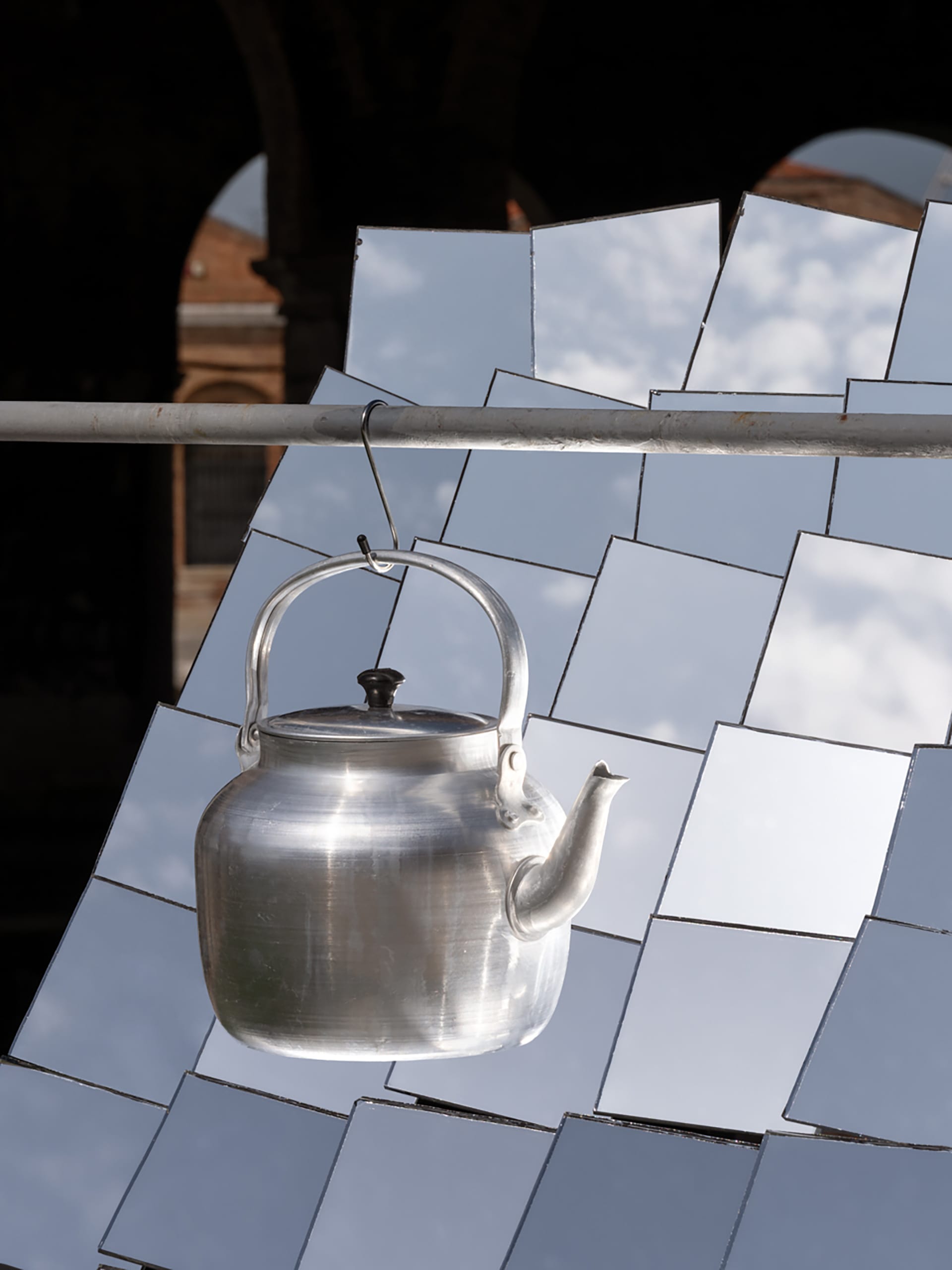
The complex is one of only two structures worldwide equipped with a big solar furnace to study material behaviour at extreme temperatures. Capable of reaching temperatures close to 3,000°C very fast and thus excluding any material impurities, the furnace was initially conceived for space and military research. It is now making a claim to shift focus towards material innovation and sustainability.
A typical case of Cold War competition, the complex was developed after an analogous facility was built in Odeillo, France in 1968. The site near Tashkent, Uzbekistan’s capital, was chosen due to the favourable climatic and geological conditions. It was one of the last major Soviet scientific projects completed before the dissolution of the USSR.
The pavilion reflects on the paradoxical character of the complex. The combination of its gigantic scale, consistent with the bipolar logic of the world before 1991, and a series of historic events generated the necessity to reinvent the scope and reformulate the reason for the furnace’s existence every time the social, economic, and political circumstances changed.
The exhibition translates this ambivalence into a dual narrative about the furnace: sustainable and unwieldy, modernist and archaic, didactic and secret, celebrative and utilitarian, specific and generic, prompting, in Steve Woolgar’s words, the capacity to ask “deeper questions about what we take for granted about science and technology”. Suspended in time and space, between innovation and obsolescence, this architecture continues to emanate its utopian aura over the surrounding landscape.
Rather than declaring the furnace’s ambiguity a flaw, the pavilion and the catalogue explore its potential, its meanings and relevance for science, sustainability and culture, asking what lessons it could provide for today. This approach provides an opportunity to reassess the complex beyond a purely preservation-focused perspective, situating it within a broader range of scientific and cultural discussions.
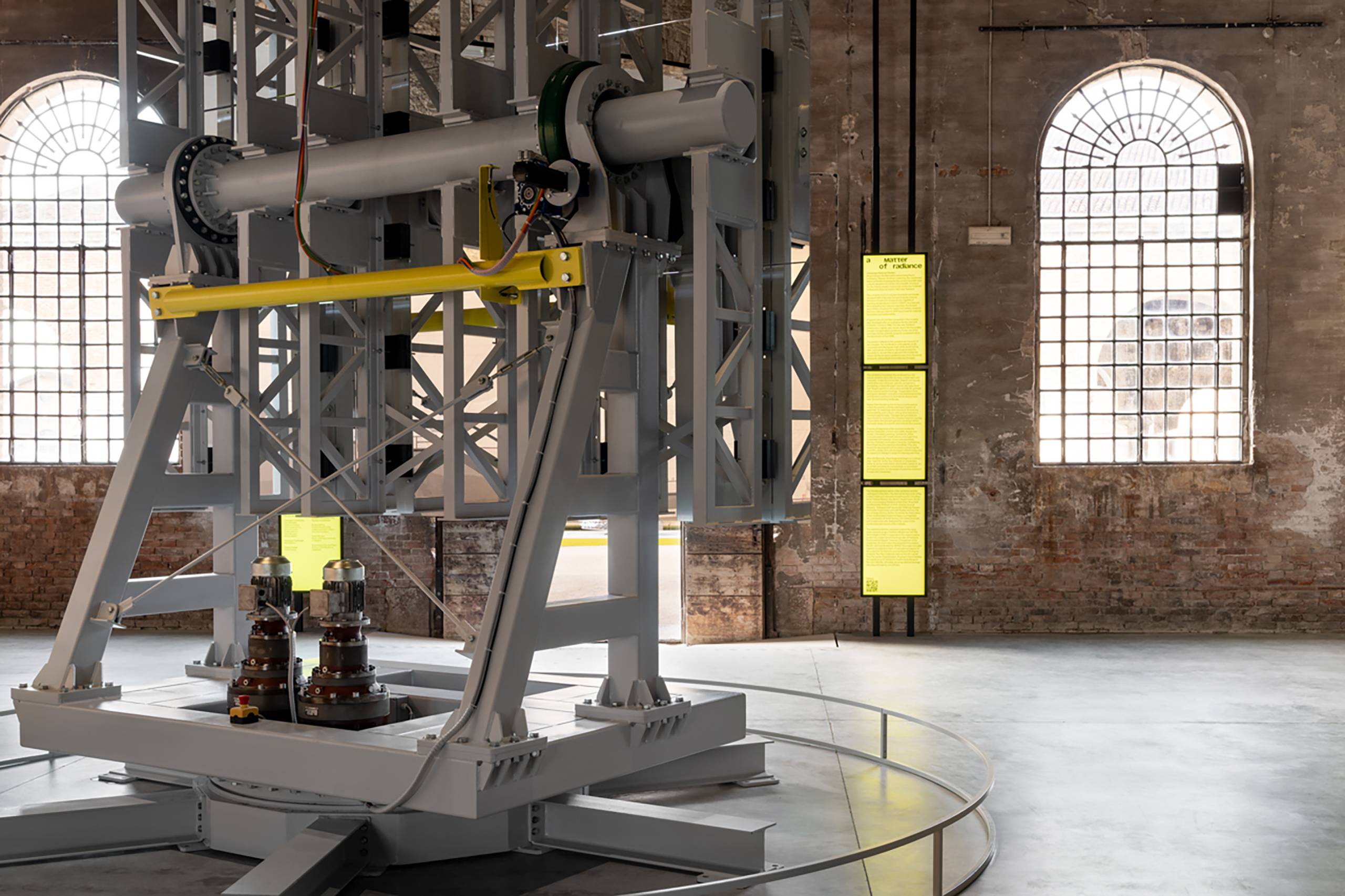
A series of fragments of the structure inside the pavilion (heliostat, control room table, façade sun screen, chandelier, painting, and bench), either reconstructed with modifications or brought from Uzbekistan and adapted, reveal and exacerbate the Sun Institute’s ambivalent character, highlighting the multiplicity of its latent functionalities. They also enable the development of narratives concerning the scientific, social and cultural impact of technology and its capacity to change or adapt its meaning over time.
After the Biennale, these fragments will begin or continue their “real life” at the Sun Institute in Uzbekistan, either as active instruments of scientific research, as its artistic and didactic components, or as pretexts and opportunities for exchange of expertise between Europe and Uzbekistan.
The interdisciplinary nature of the exhibition and the catalogue is reflected in the diverse backgrounds of the invited Uzbek and international participants, including writer Suhbat Aflatuni, the Ilkhom Theatre team, Armin Linke and emerging Tashkent artists Ester Sheynfeld and Mukhiddin Riskiyev and film director Azamat Abbasov. Dialogues with physicists Odilkhuja Parpiev and Sultan Suleymanov and with Rustam Azimov, the son of Sadyk Azimov, further illuminate the exploration of this multifaceted modernist legacy and highlight the contribution of Sadyk Azimov, the Uzbek physicist and academician who dedicated his career to the construction and launch of the institute.
The exhibition and the catalogue build on the large-scale research project Tashkent Modernism XX/XXI, which began in 2021 in response to the urgent need to protect the modernist architectural sites of Tashkent. Envisioned by Gayane Umerova, Chairperson of the Uzbekistan Art and Culture Development Foundation (ACDF), and coordinated by GRACE, the project brought together an extensive team of international experts to document for the first time and reinterpret the legacy of twenty-four key modernist sites across the capital. Over the course of several years, the project demonstrated the significance of Tashkent’s modernist buildings to the city’s identity, ultimately securing national heritage site status for twenty-one of them.